By role
  By use case
  Customer Success
  Implementation
Onboarding progress & outstanding tasks: HR systems that give managers real-time visibility
A laptop not ordered or a policy not signed. These onboarding gaps usually happen when…
4min read
 HR Core
  Payroll
  Recruitment
  Onboarding
  Performance Management
  Learning Management
  Partner Program Partner Finder
  Partner Stories
  Flare Employee Benefits
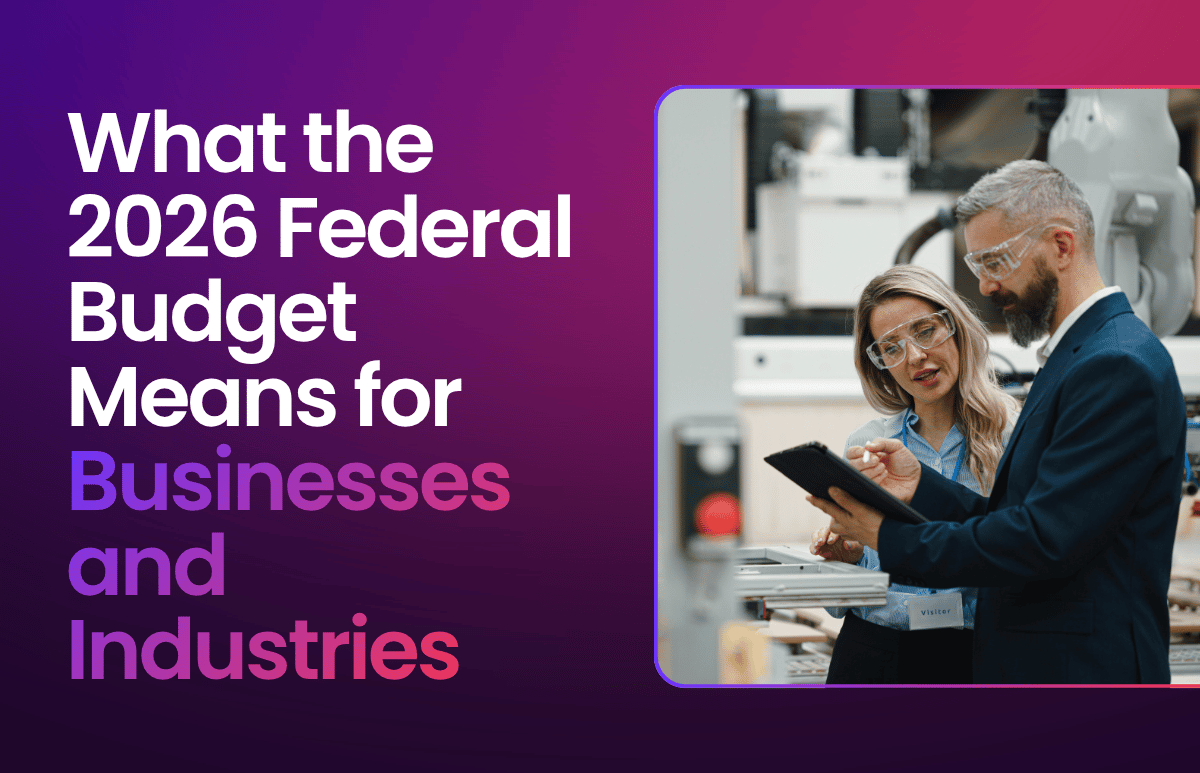
 From fast-tracking overseas qualifications to new worker tax measures, here are key announcements that could impact workforce planning.
On 12 May 2026, Treasurer Jim Chalmers handed down the 2026–27 Australian Federal Budget, describing it as “the most important and ambitious Budget in decades.”
From an HR lens, the overall direction is to uplift productivity, reduce the cost of doing business and put more money in workers’ pockets. We looked at four key updates and offered practical steps to stay ahead.
4 key things from the Federal Budget that matter
Trade roles are the primary focus of this reform — electricians, plumbers, boilermakers, welders, fitters and construction workers. If those appear on your hard-to-fill list, this reform is directly relevant. For organisations in manufacturing, where these trade skills underpin day-to-day operations, faster TRA assessment could meaningfully ease recruitment pressure in the short to medium term.
This relates to what HR leaders told us in the 2026 HR Industry Benchmark Report (HRIB), where upskilling, reskilling and cross-skilling rank as the single biggest challenge across construction (32%).
For HR leaders fighting labour shortages, it can be a meaningful medium-term lever. Faster access to overseas talent won’t necessarily solve the skills gap on its own as HR still needs to onboard overseas workers into compliant workflows, but this could potentially ease recruitment pressure.

Don’t wait for the reform to fully land. Faster recognition means faster hiring. Review and ensure your credential verification and compliance onboarding processes are updated and streamlined, ready to handle increased volume.
Before you look outward, get clear on where the pressure actually sits internally. Pull your time-to-fill data and look for patterns as your starting point. Note that trades, nursing, allied health and specialist IT roles are exactly the kinds of positions the budget reform is designed to address, so if those appear on your list, they’re worth prioritising.
Identify and map upcoming roles to assess whether overseas talent is a realistic fit. For each role, ask three questions:
If the answers point toward yes, overseas talent is worth pursuing. If they don’t, internal development or local recruitment may still be the better path.
Don’t let this reform deprioritise internal upskilling in your organisation. Know what skills your organisation has and where the gaps are. Map capabilities against current and future role requirements, not just job titles. From there, targeted learning programs can close specific gaps, while cross-skilling and internal mobility give employees pathways to grow.
ELMO’s Career Development can accelerate this by helping HR teams build capability frameworks, run assessments and deliver personalised learning paths.
HR will feel this in two ways: employees will have questions, and salary conversations will happen in a subtly different context. When real earnings are rising through the tax system, expectations around pay tend to follow.

Communicate proactively. Transparency about how these changes interact with pay builds trust. Most workers won’t read the budget papers; they’ll ask HR. Have a simple one-pager ready that explains what the WATO and tax deduction mean for take-home pay and when they apply.
Work out what the WATO and the $1,000 deduction actually mean in dollar terms across different salary bands in your organisation. A junior employee on $55,000 and a senior specialist on $120,000 will experience these measures very differently. The WATO is targeted at lower and middle-income earners — workers at higher income levels will benefit from the tax rate cuts and the instant deduction but may not receive the full offset. Having that analysis ready means HR and finance are working from facts when the conversations start.
Don’t assume the offset will lower salary expectations. According to ELMO’s 2026 HR Industry Benchmark Report, sectors where base salary increase is expected to be high — IT & telecoms (5%), construction (4.4%) and manufacturing (4%) — total remuneration conversations will become more nuanced. HR needs to be armed with the full picture before those discussions begin.
If salary movement in your sector is constrained (healthcare is only predicting 3.9% growth for 2026), then being clear and proactive about the full value of what you offer matters more. Superannuation contributions, flexible working, learning and development investment, wellbeing support and leave entitlements all factor into the real picture. Make sure those are visible in salary conversations.
Track which specific compliance reductions affect you. Not all $10 billion will flow through to HR but some will, particularly in financial services and around electronic record-keeping with regulators.
Where are you still running manual or duplicated workflows that could be automated? Reduced external compliance burden is only valuable if your internal processes are efficient enough to capture the savings.
One of the quieter changes in this budget is the government’s commitment to harmonise payroll tax administrative arrangements across states and territories, delivered through the National Productivity Fund.
Right now, every state and territory has its own thresholds, definitions, grouping provisions and lodgement rules. And for any employer with staff across multiple jurisdictions, that creates real administrative cost.
The harmonisation work is still in progress and detailed implementation timelines have not yet been published. But this is one to get ahead of now.

This won’t happen overnight, but when it does move, the organisations that have already audited their multi-state payroll setup will be best placed to adapt quickly.
Three new institutions are also being established to govern and guide the rollout: an AI Safety Institute, a Copyright and Artificial Intelligence Reference Group, and an AI Employment and Workplaces Forum, which will specifically examine AI’s impact on jobs, workforce conditions and employment policy.
For HR leaders, the grants themselves may feel at arm’s length. But the broader picture matters — the government is actively accelerating the pace at which AI tools will reach Australian workplaces.
At this stage, the budget announcement does not specify the Forum’s membership, chair, reporting structure, or timeline for its first report. Those details are likely to emerge as the government moves from announcement to implementation.
If you haven’t established clear governance around AI, now is the time to define how your organisation evaluates, approves and onboards new AI tools. Decide who signs it off, what data privacy and compliance checks apply, how employees are trained before rollout, and who owns ongoing accountability.
Without that scaffolding in place, each new tool becomes its own one-off project and the cumulative cost of that is significant. An AI governance framework, even a one-page policy, gives HR a repeatable process that scales as the market accelerates.
When new AI tools arrive, the instinct is to bolt them on top of existing systems. Organisations best placed to benefit from new AI tools will be the ones who’ve already built connected data foundations and embedded AI into core workflows. Set up approved use cases, data governance guardrails and a clear baseline of what AI ROI looks like before you roll anything out.
Not sure where you stand? Take ELMO’s AI Maturity Assessment to get a tailored picture of where you sit and where to focus first.
Research found that when AI frees up time, people default to filling it with more cognitively intense work rather than strategic thinking or recovery. This results in cognitive exhaustion. HR can own this conversation proactively, whether that means redirecting saved time into learning, job redesign, or protecting people’s capacity to think.
No matter which industry you’re in, the 2026 Federal Budget is a timely reminder that workforce planning deserves a closer look. ELMO’s Complete AI Workforce Platform helps mid-sized organisations across Australia and New Zealand turn workforce data into insight and action.
From closing skill gaps, upskilling talent and retention, to managing complex award and pay structures, ELMO brings everything you need together into one connected platform.ill

Federal Budget announcements have not been legislated and may change. The information in this publication is for information purposes only and does not constitute legal advice. For legal advice, please consult a qualified legal professional.