By industry
  By role
  By use case
  Customer Success
  Implementation
  Training & Development
 9 things to know about ELMO’s two-way sync between HR and Payroll
Say goodbye to entering the same information in multiple systems. ELMO’s payroll two-way sync now…

 Platform
  Hire
Hire  Schedule
  Pay
Pay  Develop
  Plan
Plan  Partner Program
  Partner Finder
  Partner Stories
  Flare Employee Benefits
 When 2025 drew to a close, one message rang clear: the real winners in HR aren’t those who adopted AI the fastest, but those who built the human capability to use it with confidence, creativity and care.
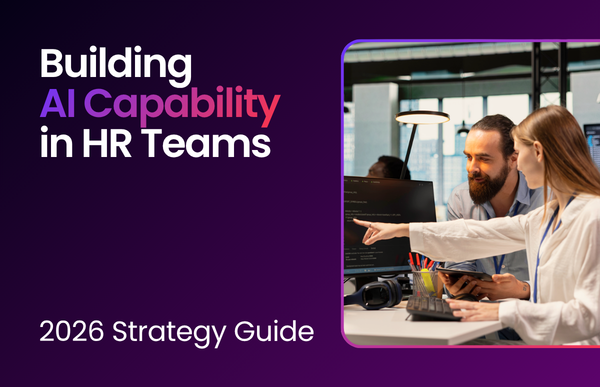
For many HR leaders and teams across Australia and New Zealand, 2026 will likely be defined by a sharper line between experimentation and transformation. The difference? It’s not in the AI tools themselves which will form the focus, it’s in the trust, the training, and the time you invest to make AI part of how your people work, learn and lead. This is where HR will shine.
That stark shortfall of support isn’t a technology gap. It’s a leadership gap. The myth of AI readiness being a ‘digital problem’ is outdated. What’s really slowing progress as we head through the new year is human hesitation, which is entirely understandable.
“There is no perfect roadmap. It’s a series of human decisions, experiments, reflections… and repeat.”
Justin Meier, ELMO’s Head of Talent, Capability & Workplace Experience
HR’s job now isn’t just to regulate AI per se, it’s to demystify it, communicate around it, and enable it. A good place to start would be psychological safety, clear guidelines and guardrails, and hands-on learning. Capability building isn’t just a day of training, it’s an everyday mindset.
Your employees are almost certainly already using AI, many just aren’t telling you. Mei Koon, ELMO’s Chief Marketing Officer, nailed this phenomenon:
“They’re doing it in the shadows, with tools you haven’t vetted, solving problems you didn’t know existed.”
Mei Koon, ELMO’s Chief Marketing Officer
The goal is to bring employee AI use out of the shadows and build confidence in solving real problems with the right tools.
Internally at ELMO we created ‘Freestyle Fridays’, where the whole team sets aside two hours and chooses a problem or inefficiency in their role and then solves it using AI. Colleagues then share their unique solution with the whole team, opening up the organisation to the true power of these tools.
We found that by using secure, approved toolkits and shared problem-solving, our teams brought interesting AI use cases out into the open (and also halted duplication by sharing problems and solutions that may be of use to many people).
That’s the real unlock. Not more control, but more openness, capability building, real world problem solving, and more sanctioned opportunities to play and get creative, with guardrails that inspire confidence.
If your people are hiding innovation, it’s not a policy or tech issue. It’s a trust issue.
The term “strategic HR” gets bandied about endlessly. But in practice, it often stays vague.
Helen Tran, Head of P&C, Business Partnering captured it plainly:
“Being strategic means being customer zero. It means shaping capability, not just documenting it. It means co-leading decisions, not catching up after the fact.”
Helen Tran, Head of P&C, Business Partnering
When speaking to AI, HR strategy will be two-fold. On one hand, you’ll need to design learning, policy, and communication for your people and their roles. On the other, you should also be looking to interrogate your own HR tools and seeing where AI and automation can make you that much more capable and integral to the business.
This is where the backing of solid AI-enhanced HR systems matter, not to replace judgement, but to support it. When insight flows across learning, performance and engagement data, HR can move from reporting what happened to shaping what happens next.
AI advice is everywhere and most of it assumes a context that isn’t yours.
As Justin Meier said, “Best practice doesn’t exist yet. Context is king.”
A healthcare provider managing compliance risk, a manufacturer balancing safety and productivity, and an NFP stretched for capacity will not adopt AI in the same way. Nor should they.
Progress in harnessing AI properly comes from choosing one real business problem and solving it well. This may be shortening onboarding time. Improving compliance visibility, or creating the ability to pull data and reports accurately and quickly.
This is why breaking down individual HR functions matters before interrogating the best use of tools like AI. You don’t need to transform everything at once. You just need to start where the pressure is highest or the rewards are the greatest, then build from there with another project.
AI isn’t just a toolset, it illuminates how work in your organisation really gets done, and what gets in the way. Creating the architecture around that gives HR the chance to get away from an admin focus to become an even more powerful, dare we say ‘strategic’ force in the organisation.
AI can relieve pressure, but only if you’ve cleared the clutter around it and created a HR led framework for organisational learning and adoption. If workflows are fragmented, data is siloed, and learning is reactive, AI becomes just another thing to manage.
In 2026, HR’s real work is to make space for capability to grow. That means:
AI isn’t the architect of change. HR is.
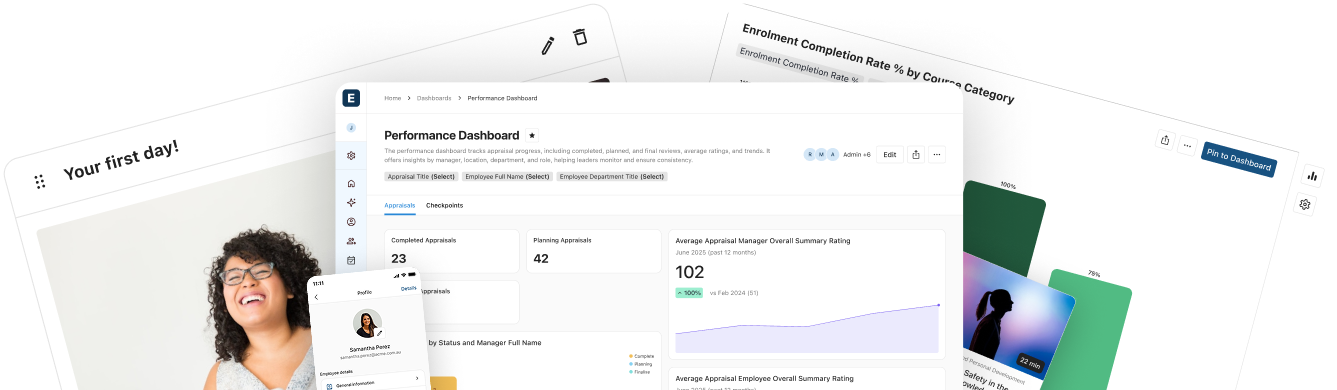
Make it role-based, not general. Accessible, not optional. Add it to existing L&D flows. ELMO Course Library, for example, already has a range of AI learning modules ready to go. To tailor it more to your specific organisation, ELMO Course Builder lets you create bespoke learning modules.
If someone’s hesitant with a new AI tool or unsure how to validate a prompt, that’s a performance insight. Regular check-ins are a perfect space to ask about confidence, blockers and learning needs. It moves capability from an assumption to a real conversation.
Use ELMO Performance to embed these check-ins so they don’t get lost between cycles, and so patterns can be seen across teams.
Short, sharp ‘pulses’ on AI fluency or barriers are more valuable than a once-a-year survey. They help identify where people feel unsure, overwhelmed or under-resourced, so you can respond before your people’s momentum stalls out.
Use ELMO Survey to check sentiment and then link outcomes to specific enablement activities.
Capability gaps don’t always show up in performance scores. They show up in role movement, missed opportunities and repeated roadblocks. Connect the dots between roles, development history and skills applied on the job.
Use ELMO HR Core to build that picture, so decisions aren’t based on guesswork.
Choose a real, persistent pain point in your own role as well as your people’s. This can be repetitive admin, compliance reporting or onboarding bottlenecks. Apply AI to improve just that. Involve the team. Share what you learn. Then repeat.
That’s how capability spreads: one useful fix at a time.
It may seem a bit cliché at this point but this really is a human led change. Tools don’t mould culture, people do. And HR is the function best placed to build it, if we choose to start where it counts: with clarity, trust, and time to learn.
That’s how transformation sticks. Not with tools. But with people.
Discover how ELMO’s integrated HR platform supports strategic workforce planning, real-time insights, and capability development.